Introduction
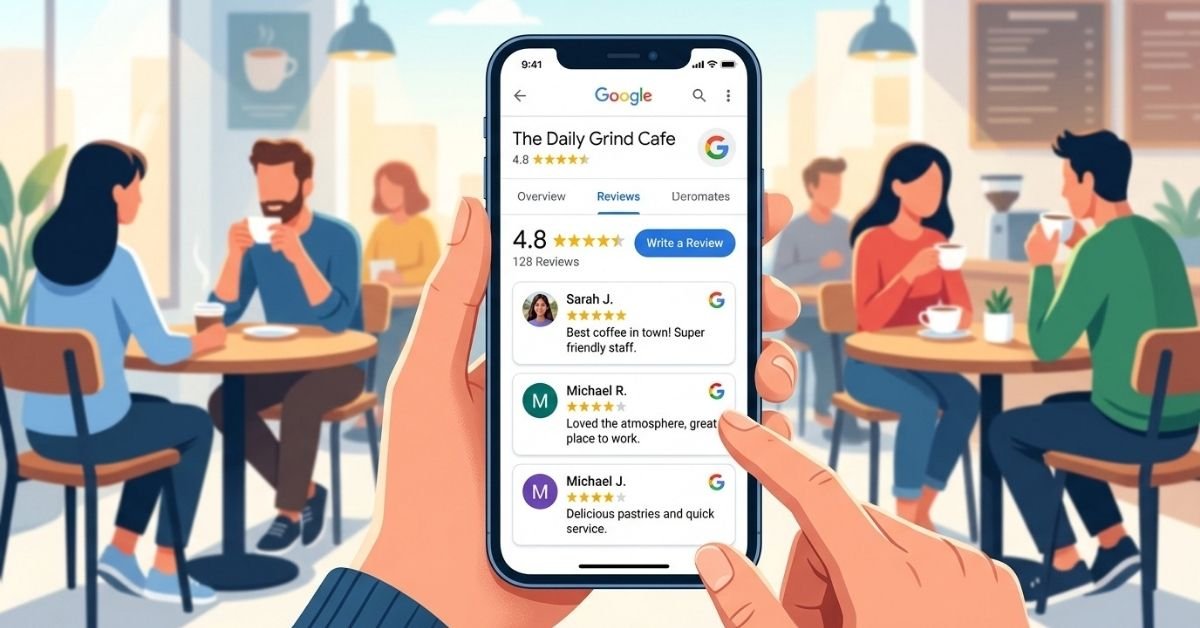
A strong Google review strategy can make a major difference for a small business.
When local customers search for a plumber, landscaper, restaurant, dentist, cleaning company, contractor, or other nearby service, reviews are often one of the first things they examine. Your star rating, number of reviews, recent feedback, and responses can all influence whether someone contacts your business or chooses a competitor.
That behavior is especially important in 2026. BrightLocal’s latest Local Consumer Review Survey found that 97% of consumers read online reviews for local businesses, while 41% say they always read reviews when looking for a business. citeturn910688search0turn910688search1
Consumers are also demanding fresher feedback. According to the same research, 74% care about reviews posted within the previous three months, and 47% would not use a business with fewer than 20 reviews. citeturn910688search3
That means simply collecting a few positive reviews and forgetting about your profile is no longer enough.
Small businesses need a consistent system for generating genuine customer feedback.
Here are 10 practical ways to build one.
1. Deliver an Experience Worth Reviewing
The foundation of every successful Google review strategy for small businesses is excellent service.
Customers are more likely to leave positive feedback when something stands out.
That could mean:
- Arriving on time
- Communicating clearly
- Finishing ahead of schedule
- Solving an unexpected problem
- Keeping a property clean
- Following up after the service
You cannot sustainably manufacture a great online reputation. It begins with the actual customer experience and also you can buy google reviews UK.
2. Ask Customers for Reviews
Many satisfied customers never leave reviews simply because nobody asks them.
BrightLocal’s 2026 research found that 94% of consumers are open to writing reviews. Of consumers who were asked to leave one, 83% ultimately did so. citeturn910688search1
Keep your request simple:
“Thank you for choosing us. If you have a moment, we’d really appreciate your honest feedback on Google.”
Do not pressure customers or ask specifically for five stars.
Ask for an honest review.
3. Ask at the Right Moment
Timing can dramatically affect your results.
Ask when customer satisfaction is highest.
For example:
A landscaper might ask immediately after showing the homeowner the completed project.
A plumber could ask after confirming that the problem has been fixed.
A restaurant might request feedback after a successful meal.
A contractor could ask when the customer approves the completed work.
The experience should still be fresh in the customer’s mind.
4. Use a Direct Google Review Link
Never make customers search for your business manually.
Google allows businesses to create a direct link customers can use to leave a review. citeturn910688search2
Send that link through:
- Text messages
- Email
- WhatsApp
- Thank-you messages
- Digital receipts
- Follow-up communications
Fewer steps mean less friction.
Instead of saying:
“Please find us on Google and review us.”
Say:
“We’d appreciate your feedback: [Google Review Link]”
5. Create a Google Review QR Code
For businesses that interact with customers in person, QR codes can be extremely useful.
Google provides businesses with the ability to generate a QR code directing customers to the review page. Google suggests using it in locations such as stores and including review requests on receipts and thank-you communications. citeturn910688search2
Place your QR code on:
- Business cards
- Receipts
- Invoices
- Counter displays
- Thank-you cards
- Service paperwork
- Printed materials
Add a clear message such as:
“How did we do? Scan to leave us an honest Google review.”
6. Automate Your Review Requests
Consistency is more important than occasionally asking for 20 reviews at once.
Build the request into your normal customer process.
For example:
Job completed → Thank-you message → Review request → Follow-up → Business responds
A CRM, email platform, scheduling system, or simple automated text-message workflow can help.
The goal is not to automate fake engagement.
It is simply to ensure that legitimate customers consistently receive an opportunity to share their experience.
7. Focus on Review Recency
Do not treat reviews as a one-time project.
A business with 300 reviews but no recent activity can look less relevant than a competitor receiving new feedback every week.
BrightLocal found that 74% of consumers care about reviews written within the previous three months, while 44% specifically value reviews posted within the last month. citeturn910688search3
This makes continuous review generation more valuable than short bursts.
Instead of saying:
“We need 100 reviews.”
Think:
“We need genuine new customer reviews every month.”
8. Respond to Positive and Negative Reviews
Your review strategy should not stop once the customer clicks “Post.”
Respond.
A thoughtful response demonstrates that your business pays attention to customers.
Avoid posting exactly the same message every time.
Instead of:
“Thanks for the five stars!”
Try:
“Thank you, Sarah. We’re glad you’re happy with the new landscaping and appreciate you trusting our team with your property.”
Negative reviews also deserve professional responses.
Avoid arguments. Acknowledge the concern, remain factual, and offer an appropriate way to continue the conversation privately.
In 2026, consumers increasingly consider business responses when evaluating companies, and slow or generic responses can reduce confidence. citeturn910688search0
9. Never Buy or Incentivize Reviews
Buying reviews may seem like a shortcut, but it can create serious problems.
Google states that reviews must reflect genuine experiences. Offering incentives such as free or discounted goods or services in exchange for reviews is prohibited as fake engagement. citeturn910688search2
Avoid:
- Purchasing review packages
- Offering discounts for reviews
- Giving free products for reviews
- Paying employees or outsiders to create fake reviews
- Asking people who were never customers to review the business
Likewise, avoid systems that intentionally discourage unhappy customers from posting feedback while directing only satisfied customers to Google.
A smaller collection of legitimate reviews is far more valuable than a suspicious profile filled with artificial ones.
10. Track Your Competitors and Set Review Goals
There is no universal number of Google reviews every business needs.
Your competitive environment matters.
Search for the services you want to rank for and examine businesses appearing prominently in your market.
Suppose your top competitors have:
- Competitor A: 42 reviews
- Competitor B: 76 reviews
- Competitor C: 118 reviews
If your company has Buy google reviews , reaching 20 is a useful milestone—but probably not your long-term target.
Build progressively:
20 reviews → 50 reviews → 100 reviews → remain competitive with the strongest businesses in your market.
Current consumer research supports treating 20 reviews as an important early credibility threshold: 47% of consumers surveyed in 2026 said they would not use businesses with fewer than 20 reviews. citeturn910688search3
A Simple Google Review Strategy to Follow
A small business does not need a complicated system.
Use this process:
1. Deliver excellent service
2. Confirm customer satisfaction
3. Ask for honest feedback
4. Send the direct Google review link
5. Follow up appropriately
6. Respond when the review appears
7. Repeat the process consistently
Over time, this creates a natural stream of recent, genuine reviews.
Frequently Asked Questions
How many Google reviews should a small business have?
There is no fixed number. A useful first milestone is 20 reviews, followed by 50 and 100. Ultimately, compare your review profile with successful competitors in your local market.
How often should I ask customers for Google reviews?
Ask consistently after legitimate customer interactions. The goal should be ongoing review generation rather than collecting many reviews at once and then stopping.
Can I offer customers a discount for leaving a Google review?
No. Google states that incentives such as free or discounted goods or services in exchange for reviews are prohibited. citeturn910688search2
Can I send customers a direct link to leave a review?
Yes. Google Business Profile allows businesses to generate and share a direct review link or QR code. citeturn910688search2
Should I respond to every Google review?
Responding whenever practical is a strong reputation-management practice. Personalized responses show customers and prospective customers that your company values feedback.
Conclusion
A successful Google review strategy for small businesses is not about tricks or fake five-star ratings.
Deliver excellent service, ask real customers for honest feedback, make reviewing easy, respond professionally, and keep generating fresh reviews consistently.
Start building your review system today, and turn satisfied local customers into one of your strongest sources of trust and future business.
This also gives you a strong three-article SEO cluster: “How Many Google Reviews Does a Small Business Really Need?” → “How to Get Google Reviews From Local Customers” → “Google Review Strategy for Small Businesses: 10 Practical Tips.” Internal links between those pages can help users move naturally through the topic while strengthening the overall topical structure of the site.