Introduction
Knowing what to do in an emergency can save a life. When someone stops breathing or their heart stops beating, early care helps keep blood and oxygen moving through the body. This early care is called Basic Life Support. It includes easy to learn skills that help you act quickly and safely before advanced medical help arrives. These skills are useful for health care workers, parents, coaches, and everyday people. Learning these steps builds confidence and helps you feel ready if a crisis happens.
This article explains the core skills of Basic Life Support and why they matter. You will learn what the training covers, how it works in real situations, and how anyone can start learning these lifesaving steps.
What Basic Life Support Means
Basic Life Support, often shortened to BLS, is about helping someone who needs immediate care. It focuses on lifesaving steps like chest compressions, rescue breathing, and safe practices that protect both you and the person you are helping. These actions help keep vital organs alive while waiting for emergency medical services.
A good training program teaches not only the steps but also how to recognize when help is needed. This includes checking responsiveness, calling for help, and beginning lifesaving actions without delay.
Who Can Benefit from Learning These Skills
You do not need to work in a hospital to benefit from learning lifesaving skills. Many people find this training useful, including:
- Parents and caregivers
- Teachers and school staff
- Coaches and sports leaders
- Office workers and community volunteers
- Health care students and professionals
Emergencies can happen anywhere. Learning Basic Life Support helps you act with calm and confidence in places like home, school, playgrounds, and public spaces. If you want structured training that fits your schedule, consider this Basic Life Support program and learn more
How Training Begins: Recognizing an Emergency
Before performing any lifesaving action, you must know when someone needs help. The first steps in training teach you how to:
- Check for responsiveness by speaking to the person
- Call for emergency help right away
- Position the person safely on the ground
These steps help you decide if the person needs immediate care like chest compressions or rescue breaths. Acting fast gives the person the best chance of survival.
Chest Compressions: The Core Skill
One of the most important parts of Basic Life Support is chest compressions. This means pushing down on the person’s chest to keep blood flowing. In training, you learn:
- Where to place your hands
- How deep the pushes should be
- The right speed for compressions
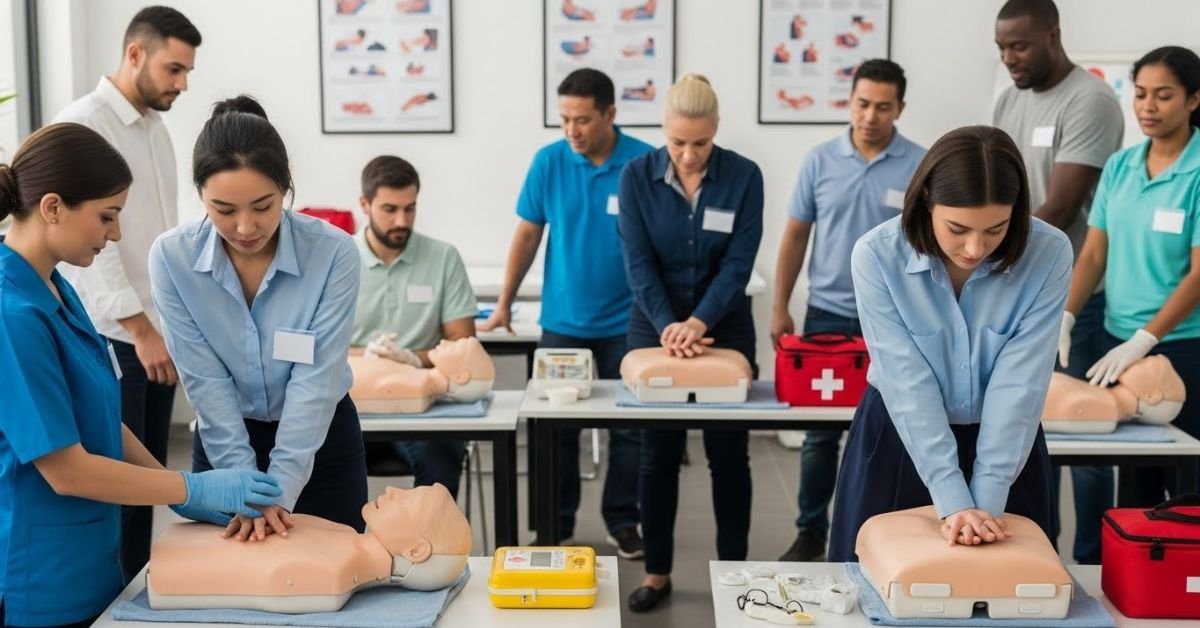
Hands on practice with a manikin helps you feel how firm and fast to push. Training focuses on keeping a steady rhythm and correct depth. These details matter because good chest compressions keep blood moving to the brain.
Rescue Breaths: Helping with Breathing
When someone is not breathing but their heart is still beating, rescue breaths are important. Training shows you how to:
- Open the airway safely
- Give gentle breaths to support breathing
- Use simple barriers to protect both you and the person
Rescue breaths are combined with chest compressions in many situations. You learn to alternate pushes and breaths in the right order so the person gets oxygen and circulation.
Using Simple Tools in Basic Life Support
In some cases, you may use basic breathing tools that help deliver air more safely. Training teaches you how to use these items if they are available. You learn how to:
- Position the tools correctly
- Avoid causing harm while using devices
- Combine tool use with other steps
Tools are helpful, but your own skills are still the most important part of Basic Life Support.
Working with Others During an Emergency
Emergencies often involve more than one helper. Basic Life Support training includes how to work with others. You learn to:
- Assign roles quickly
- Communicate clearly while helping
- Let others know when advanced help is on the way
Teamwork helps make sure that lifesaving steps happen without confusion. When everyone knows what to do, the response becomes organized and effective.
Hands On Practice and Muscle Memory
One reason training uses practice tools and manikins is to build muscle memory. Muscle memory helps your body remember actions even when you are nervous. The more you practice:
- The easier it is to find the right hand position
- The easier it is to keep a steady rhythm
- The more confident you feel in real situations
Repeating these steps during training makes your response smoother when every second counts.
What to Expect in a Training Program
A good Basic Life Support program has clear lessons that explain each step. You will usually see:
- Short instructional videos or demonstrations
- Pictures or diagrams that simplify learning
- Practice exercises for each skill
- Checks to make sure you understand the steps
Many programs let you learn at your own pace so you can review material as needed. Practicing often before testing helps you feel prepared and calm.
Testing and Certification
After learning the skills, you will usually complete a test to show you understand them. This may include:
- A check of hands on skills like compressions and rescue breaths
- Questions about what you learned
- Scenarios that show how you think in real moments
Passing the test earns you a certificate that shows you completed the training. Certificate renewal is often needed every few years so your skills stay updated.
Staying Ready After Training
Just learning the steps once is not enough to stay ready. Skills can fade over time if not reviewed. You can stay ready by:
- Practicing skills with a partner
- Watching refresher videos
- Reviewing key points every few months
Staying ready increases your confidence and helps you act quickly if someone needs help.
Real Life Situations Where These Skills Matter
Basic Life Support skills are useful in many real life moments, such as:
- Someone collapsing at school or work
- A family member experiencing breathing difficulty
- An accident in a public space
- A friend suddenly losing consciousness
Early action gives the person the best chance of survival. Knowing what to do in these moments helps you act without panic.
Why Confidence Matters in Emergencies
Emergencies can feel scary. When you are unsure what to do, fear can slow your response. Training gives you clear steps so you know what to do next. Confidence comes from:
- Practicing skills often
- Understanding why each step matters
- Knowing how to work with others
Confidence makes your actions smoother and more effective, and that can save a life.
Common Questions People Ask
Here are answers to questions many people have:
- Can anyone learn these skills?
Yes. Basic Life Support is designed for people with all levels of experience. - Do these skills help outside health care?
Absolutely. These steps are useful in everyday emergencies. - Does training cost a lot?
Many programs are affordable and offer flexible learning. - Is certification necessary to help someone?
No. You can still use these skills to help someone even without a certificate. Certification shows you have completed structured training.
Conclusion
Basic Life Support skills help you act with care and confidence when someone needs help. Learning chest compressions, rescue breaths, and how to work with others gives you the tools to support life until advanced help arrives. These skills are useful for people in many walks of life, not just health care workers.